Invited Speakers
The school features a list of invited speakers, so as to illustrate the richness in the field of Artificial Intelligence (AI).
The Summer School intends not only to deepen the knowledge of the assisting students, but also to widen their understanding of the different fields that contribute to AI, from its neurological inspirations to the regulation and ethics of running systems.
Yara Abu Awad
Francesco Bardozzo
Alexander Binder
Mario Cannataro
Christine Choirat
David Gómez-Cabrero
Oscar Cordón
Mikel Hernáez
Gabriel Kreiman
Xabier Martínez de Morentin
Giovanni Montana
Igor Poltavsky
Rodrigo Quián Quiroga
Michiel Stock
Roberto Tagliaferri
Yara Abu Awad
Swill Federal Statistical Office, Switzerland
Francesco Bardozzo
Universita degi Studi di Salerno, Italy
Francesco Bardozzo, is a researcher at the University of Salerno, where he completed his entire academic training, earning his Bachelor's and Master's degrees cum laude in Artificial Intelligence and Computational Sciences, and his PhD summa cum laude in 2021, a work that was nominated for the INNS Doctoral Dissertation Award by the International Neural Network Society. His research spans deep learning, explainable artificial intelligence, medical image processing, computational biology, and computational finance, with over 30 scientific publications in international journals, and serving as journal academic editor for PLOS ONE and the International Journal of Computational Intelligence Systems. He actively collaborates with world-leading institutions such as the Computer Laboratory at the University of Cambridge, IRCAD in France, and the NAIR Research Center in Pamplona. Beyond science, Francesco firmly believes that artificial intelligence can transcend disciplinary boundaries: he is a member of the Scientific Committee of ISIA-Politecnico delle Arti in Florence and develops projects where AI meets music and art.
Alexander Binder
Universität Leipzig, Germany
Alexander Binder is Professor for Multimodal Machine Learning at Leipzig University and a Principal Investigator at the Center for Scalable Data Analytics and Artificial Intelligence (ScaDS.AI) Dresden/Leipzig.
He studied Mathematics at Humboldt University of Berlin and received his PhD in Computer Science from the Technical University of Berlin in 2013. During his doctoral studies, under the supervision of Klaus-Robert Müller, Binder developed Layer-wise Relevance Propagation (LRP), a method widely used to explain the predictions of neural networks.
Before joining Leipzig University, he was Assistant Professor at the Singapore University of Technology and Design (2015–2020) and later Associate Professor at the Singapore Institute of Technology.
His research focuses on explainable artificial intelligence (XAI), deep learning, and multimodal machine learning, aiming to better understand and interpret the predictions of complex neural network models.
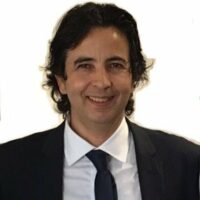
Mario Cannataro
Universita Magna Graecia di Catanzaro, Italy
Mario Cannataro received the Laurea Degree (cum laude) in computer engineering from the University of Calabria (Italy) in 1993. Prof. Cannataro is a full professor of Computer Engineering and Bioinformatics and the director of the Data Analytics Research Center at the University Magna Graecia of Catanzaro, Italy. In this university, he also coordinates the Bachelor course in Informatics and Biomedical Engineering and the PhD Program in Artificial Intelligence, Biomedical and Informatics Engineering.
His current research interests include bioinformatics, health informatics, artificial intelligence, data mining, and parallel computing. He has published 6 books and more than 300 papers in international journals and conference proceedings, and has more than 8000 cites in Google Scholar.
He is co-Editor-in-Chief of Encyclopedia of Bioinformatics and Computational Biology 2nd Ed., Associate Editor of Briefings in Bioinformatics, and Associate Editor of Transactions on Computational Biology and Bioinformatics. Prof. Cannataro is a member of the Ethical Committee of the Calabria Region and a Senior Member of IEEE, ACM and BITS (Bioinformatics Italian Society). In the past he was a member of the Board of Directors of ACM Special Interest Group on Bioinformatics, Computational Biology, and Biomedical Informatics (SIGBio).
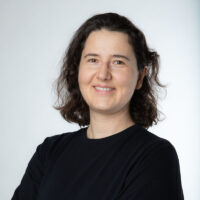
Christine Choirat
Swill Federal Statistical Office, Switzerland
Christine Choirat is Head of the Data Science and AI Section at the Federal Statistical Office of Switzerland. She holds a PhD in Applied Mathematics from Paris Dauphine University (2003) and developed her academic career at the Harvard T.H. Chan School of Public Health as a Senior Research Scientist and instructor in the Master's in Health Data Science program. Her research spans data science, reproducible research, and health and environmental policy. An advocate for equitable technology, she promotes reproducibility in computational research through open-source tools and platforms for rigorous and transparent analysis. In this context, she leads the team behind Lomas, Switzerland's first open-source platform for confidential data analysis, enabling privacy-preserving research at a national scale.
In 2025, she was recognized in the Top 100 Women in AI & Data – Switzerland ranking, which distinguishes the most influential women in data and AI in Switzerland.
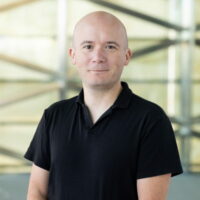
David Gómez-Cabrero
King Abdullah University for Science and Technology, Saudi Arabia
Professor David Gomez-Cabrero is a bioinformatician and computational biologist dedicated to advancing biomedical research. He earned his Ph.D. Cum Laude in Mathematics from the Universitat de València in 2009.
His extensive international career includes roles as a Postdoctoral Researcher and Assistant Professor at the Karolinska Institutet (2010–2018), and as a Senior Lecturer at King's College London (2016–2020). From 2017 to November 2024, he directed the Translational Bioinformatics Unit at Navarrabiomed in Spain. Since January 2021, he has served as a full-time Associate Professor at KAUST.
He leads a multidisciplinary research team focused on developing robust statistical methodologies to resolve complex biological challenges. His expertise centers on the integrative analysis of bulk, single-cell, and spatial transcriptomics within multi-omic frameworks, with a strong emphasis on principled data integration strategies, including the development of the STATegRa framework. His work leverages machine learning and systems biology approaches to dissect disease mechanisms and identify actionable molecular targets in complex disorders, including Multiple Sclerosis and Multiple Myeloma. This work has been published in leading journals, including Nature Communications, Science Advances, Nature Medicine, and Nature Genetics.
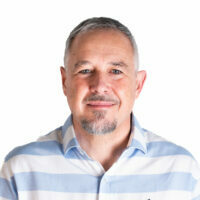
Oscar Cordón
Universidad de Granada, Spain
Óscar Cordón (Fellow, IEEE) is a Professor at the University of Granada with over 30 years of experience in artificial intelligence, spanning both theoretical foundations and real-world applications. He is author of a reference book on Genetic Fuzzy Systems and ranks in the top 2% most cited researchers worldwide in AI (Stanford-Elsevier ranking).
His work has earned recognition including the IEEE CIS Outstanding Early Career Award (2011), the IFSA Award for Outstanding Applications of Fuzzy Technology (2011), the Spanish National Computer Science Award ARITMEL (2014), and the IFSA Fellowship (2019), among others. He was also a member of the High-Level Expert Group that developed the Spanish R+D Strategy for AI (2018-19).
He holds four international patents on intelligent systems for forensic identification, commercially exploited by Panacea Cooperative Research in markets including Mexico and South Africa, and has served as Associate Editor of multiple international journals and in representative roles within EUSFLAT and IEEE CIS since 2004.
His current research focuses on AI for forensic identification, in collaboration with the UGR Physical Anthropology lab and international forensic and security organizations, and on agent-based modeling and social network analysis for marketing, developed with R0D Brand Consultants for clients such as Mercedes, Telefónica, Samsung, Coca-Cola Europe, and El Corte Inglés, through the ZIO Analytics platform.
Mikel Hernáez
Universidad de Navarra, Spain
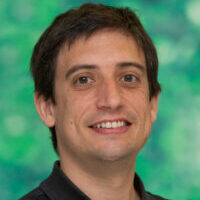
Dr. Mikel Hernáez is the Director of the Computational Biology and Translational Genomics Program at CIMA Universidad de Navarra. He also heads the Machine Learning for Biomedicine Group and serves as an Adjunct Professor at the University of Navarra.
He holds a degree in Telecommunications Engineering (2009) and a Ph.D. in Electrical Engineering (2012) from TECNUN. Following postdoctoral research at Stanford University (2013–2016), he served as Director of Computational Genomics at the Carl R. Woese Institute for Genomic Biology (University of Illinois) before returning to Spain in 2020.
His research leverages machine learning, computational methods, and information theory to address complex biological challenges. An expert in single-cell omics, genomic data compression, and cancer pathophysiology, Dr. Hernáez has been recognized with prestigious awards, including a Marie S. Curie Fellowship and a Ramón y Cajal contract. His high-impact work is regularly published in leading scientific journals, such as Science Advances and Nature Machine Intelligence.
Gabriel Kreiman
Harvard University, United States of America
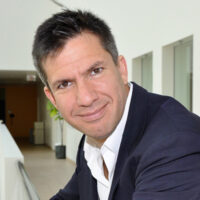
Gabriel Kreiman is a professor at Harvard Medical School and an associate director at the Center for Brains, Minds and Machines (Massachusetts Institute of Technology). He received his master of science degree and Ph.D. from the California Institute of Technology and was previously a postdoctoral fellow at the Massachusetts Institute of Technology. He received a 2010 National Science Foundation CAREER award and a 2009 National Institutes of Health New Innovator Award. His research focuses on computational neuroscience and artificial intelligence approaches to learning and memory.
Xabier Martínez de Morentin
King Abdullah University for Science and Technology, Saudi Arabia
Biography to be completed
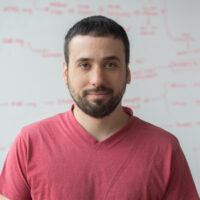
Dr. Xabier Martínez de Morentin is a postdoctoral fellow at King Abdullah University of Science and Technology (KAUST), where he applies computational methods to spatial biology. He holds a Ph.D. Cum Laude in Applied Medicine and Biomedicine from the University of Navarra (2023), alongside Master's degrees in Data Science and Biomedical Engineering, and a degree in Telecommunications Engineering.
His research lies at the intersection of artificial intelligence and biomedicine, focusing on complex biological systems through computational modeling, spatial transcriptomics, and single-cell technologies. By leveraging machine learning, data integration, and representation learning, his work aims to uncover cellular organization and disease mechanisms in areas ranging from cancer to neurodegeneration.
Previously, he contributed to bioinformatics, proteomics, and clinical trial projects at Navarrabiomed, while also developing clinical research infrastructures as a full-stack developer. Highlighting his expertise in AI for life sciences, Dr. Martínez de Morentin was part of the winning team in two challenges at the NeurIPS 2021 "Open Problems in Single-cell Analysis" competition.
Giovanni Montana
University of Warwick, United Kingdom
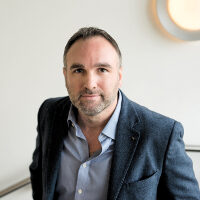
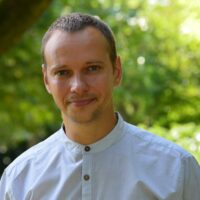
Giovanni Montana is Professor of Biostatistics and Bionformatics in the Department of Biomedical Engineering at King's College London. He received a Ph.D. in Statistics from the University of Warwick in 2003, and then held a post-doctoral position at the University of Chicago. In 2004 he joined the Statistical Genetics & Biomarkers research group at Bristol-Myers Squibb, in Princeton. Prior to joining King's College in 2013, he was Reader (Associate Professor) in Statistics in the Department of Mathematics at Imperial College London, which he joined in 2005 as GlaxosmithKline Lecturer in Statistics. He's a Fellow of the Royal Statistical Society and Chartered Statistician, and holds a Visiting Professor position in the Department of Mathematics at Imperial College. His main research interests lie in statistical computing and machine learning with applications to biomedical data analysis, including genomic and medical imaging. He's also actively working in Big Data analytics.
Igor Poltavsky
University of Luxemburg, Luxemburg
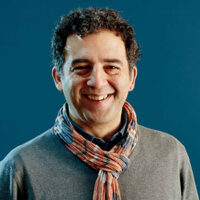
Dr. Igor Poltavsky is a Research Scientist and team leader at the University of Luxembourg, working at the intersection of theoretical chemistry, statistical physics, and machine learning. His research focuses on developing machine-learning force fields that enable reliable atomistic simulations with near quantum-chemical accuracy. He combines path-integral methods, high-level electronic structure theory, and modern machine-learning architectures to study flexible molecules and materials under realistic conditions. His current work focuses on developing automated training strategies for general-purpose machine-learning force fields, with particular emphasis on controlling their accuracy and applicability across diverse chemical environments.
Rodrigo Quián Quiroga
Hospital del Mar Barcelona, Spain
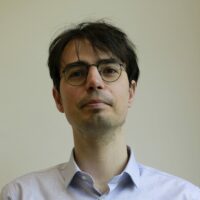
Rodrigo Quian Quiroga studied Physics at University of Buenos Aires and did a PhD in Applied Mathematics at the University of Luebeck, Germany. He was a postdoc at the Research Center Juelich, Germany and a Sloan Fellow at Caltech. In 2004, he got a lectureship at Leicester University, was promoted to Reader in 2006 and to full Professor and Head of Bioengineering in 2008. In 2012 he was awarded a Research Chair and founded the Centre for Systems Neuroscience. Since 2023 he is an ICREA Research Professor, working at the IMIM. He has published more than 120 papers and 5 books (Borges and memory, The forgetting machine, Neurocience Fiction, Imaging brain function with EEG, and Principles of neural coding). He is a fellow of the Academy of Medical Sciences in the UK and was selected as one of the 10 UK leaders in Science and Engineering by the Royal Academy of Engineering and the Engineering and Physics Research Council.
Michiel Stock
Ghent University, Belgium
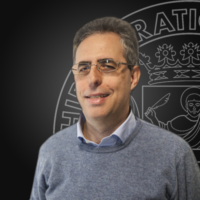
Michiel Stock is an assistant professor at Ghent University, where he co-leads the KERMIT research group in the Faculty of Bioscience Engineering. His research sits at the interface of machine learning and the life sciences, with work spanning phage–host interaction prediction, kernel methods, optimal transport, Bayesian inference, hyperdimensional computing, and mechanistic models of plants and ecological networks. A recurring theme in his group's work is bridging data-driven and mechanistic modelling, often in the Julia programming language, and finding unexpected mathematical connections between biological problems.
Roberto Tagliaferri
Universita degi Studi di Salerno, Italy
Roberto Tagliaferri is Full Professor of Computer Science at the Department of Business Sciences - Management & Innovation Systems at the University of Salerno.
He has taught courses in the areas of Architectures, Neural Networks, Artificial and Computational Intelligence, Computational Biology, and Bioinformatics. He has organized national and international workshops on Neural Networks, Machine Learning, and Bioinformatics since 1988, and is editor of 19 volumes of Proceedings.
He is coordinator of the doctoral programs in Big Data Management and in Data Science, Accounting & Management.
His scientific activity has been focused on the design and analysis of Neural Network models, Hybrid Systems, and Clustering algorithms, as well as interactive visualization of multidimensional data. This work has led to the development of numerous applications primarily in the fields of Bioinformatics, Physics, Astronomy, Environmental and Biomedical Diagnostics, and has resulted in over 180 scientific papers published in international peer-reviewed journals and conference proceedings. He currently holds an h-index of 32 with 4,296 citations on Scopus, and an h-index of 40 with 6,645 citations on Google Scholar.